
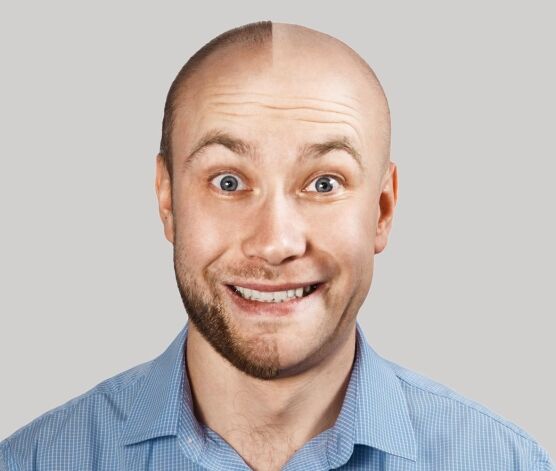
Before and after your hair transplant in Toronto, you’ll have some critical decisions to make. First and foremost, you don’t want to trust your locks—or lack thereof—to just anyone. While the seemingly low cost of a hair transplant in India or Turkey may be appealing, can you be guaranteed that the methods, operating facilities, and aftercare will measure up to that of a skilled hair transplant surgeon in Canada?
Beyond the hair transplant pictures, we recommend that you research the various methods of hair transplant surgery available, adjunct therapies, and the expertise of the surgeon performing them.

Hair Transplant
Besides hair transplant before and after pics, how can you predict excellent results?
Before and after hair transplant photos don’t reveal the entire process that is required to obtain a satisfying head of hair. Nor do they necessarily tell you the method of hair restoration used. Did you know that sometimes the post-procedure results that you view were obtained with more than one FUE session?
Nowadays there are a couple of commonly used techniques employed to restore hair for male and female pattern baldness. For many Toronto hair transplant surgeons, FUE (follicular unit extraction) has become the leading choice, because it avoids a few of the drawbacks from previous technology. Individual hair follicles are harvested from the donor site, usually from the back or sides of the head where the hair is thickest. Then the follicles are transplanted into the area of hair loss.
FUE with Dr. Torgerson involves punching out very tiny follicle units one by one rather than removing a scalp strip. This tedious but rewarding technique derives its popularity from the lack of scarring and the quick recovery time. FUE hair transplant before and after results show minimal, if not invisible, scars. FUT (follicular unit transplantation) is also nicknamed the strip method. It’s still in use today for some cases where hair loss is severe or very high numbers of grafts are required in a single session. Its drawbacks include the notable linear scarring at the donor site.

Who can undergo a hair transplant?
One of the keys to getting the before and after results you want is choosing a hair transplant at the right age. Some guys panic at the first sign of a receding hairline and jump the gun. In most cases, it’s recommended that a potential candidate waits until hair loss stabilizes before seeking hair restoration. If a hair transplant is done too soon, the results can be unpredictable or undesirable. Additional hair transplant sessions to correct the result could be required after further hair loss. A reputable Toronto hair transplant specialist will be willing to sit down with you to help determine the best time to consider a hair transplant. If the time is right, they can help you create an appearance that compliments your personality and your current age and that will still look natural and age-appropriate for years to come.
What can you do before and after a hair transplant to maintain your results?
Hair restoration surgery can give you a new lease on life. But consider the following lifestyle factors to ensure that you enjoy your hair transplant in the long run.
Diet plays a crucial role in hair health. Nutrient-rich foods as well as vitamins and minerals can add lustre and life to hair. Eating disorders and other underlying conditions can result in iron and zinc deficiencies, which can trigger hair loss. Your doctor may want to monitor your nutritional health before and after hair transplant.
Stress can impact your entire look, and it is often revealed in the hair through both thinning and dull appearance. Habits like exercise and stress-reducing practices have been known to reverse hair loss by promoting circulation and regulated hormones.
Over processing is another culprit associated with hair loss. You’ll rarely see hair transplant before and after photos with tight hairstyles like braids in the post pictures. That’s because chronic tension can damage the follicles and cause baldness. Avoid having your hair tied up in a ponytail, braid, or bun for extended periods of time. Limit the use of hot rollers or other heat-generating hair appliances such as flat irons. For men and women alike, a professional stylist is recommended when it comes to colouring or other chemical-based treatments.
Hair Transplant Surgery
Do this immediately following hair transplant surgery
There are several post-surgical recommendations to ensure optimal outcomes from your hair transplant. It’s imperative to be gentle on your scalp. Avoid shampoo until your doctor gives you the go-ahead. Once you’re cleared to wash your hair, a mild shampoo with a gentle touch is recommended. Your doctor may prescribe a topical medication to the surgical site, but it also should be applied gently without vigorous rubbing. Avoiding extremely hot water and patting your hair dry is suggested to maintain your scalp health before and after hair transplant.
While it is tempting to touch the areas where your hair has been newly transplanted, don’t. There may be a period of itchiness as healing takes place, but picking at your scalp can lead to complications such as infection.
Your fitness routine will need to be curtailed for at least 7 to 10 days after your hair transplant. Both you and the transplant area need to rest to ensure that the new hair follicles remain in place and take root. Water sports like swimming or indulging in a hot tub soak are strongly advised against for the initial recovery period.
Dr. Cory Torgerson
Plan to be Patient
Hair growth following restoration surgery doesn’t occur overnight. It can take longer than expected, so some patients seek out popular supportive treatments. PRP (platelet-rich plasma therapy) made from a patient’s blood is injected superficially into the scalp and is known to speed up the healing and growth process. A doctor might also prescribe minoxidil, a topical antihypertensive vasodilator that helps slow or prevent hair loss. In pill form, finasteride is another prescribed medication for men that is known to stop hair loss and potentially increase growth as long as the patient is taking it. Lastly, low-level laser therapy (LLLT) works to combat the DHT hormone that causes hair loss and stimulate hair growth at the roots. This non-invasive therapy can be carried out in the comfort of your home before and after hair transplant.
Whichever method or combination of treatments you want to try, the experience of your surgeon should be a determining factor. Why not book a consultation with experienced hair restoration specialist Dr. Torgerson at the THTC? We look forward to meeting you!
Additional Articles About Hair Transplant Treatment
Hair Transplant Articles
- What s the Price of a Hair Transplant in Toronto?
- Platelet-Rich Plasma (PRP) Therapy at the THTC
- Hair Transplant Toronto: How to Get Results You’ll Still Love in 10 Years
- Here’s What You Really Get for the Cost of a Hair Transplant
- Why Choose FUE Hair Transplant Treatment?
- Your Guide to Choosing the Right Toronto Hair Transplant Clinic
- Why Have A Hair Transplant?
- What You Can and Can’t Do the Week After a Hair Transplant
- What to Expect from the Toronto Hair Transplant Clinic
- What Is a Hair Transplant?
- What Causes “Hot Tub Folliculitis”?
- Toronto SmartGraft—How to Ensure Your Best Result After Your Hair Transplant Procedure
- Toronto Hair Transplant Results: Why Do Some Look Better Than Others?
- The Hairline Is The Most Important Part Of A Hair Transplant
- The Etiology Of Hair Transplantation
- The Background Of Hair Transplantation
- The Dangers of Getting Your Hair Transplant Overseas
- SmartGraft is One of the Best Hair Transplant Options in Toronto
- SmartGraft Hair Transplant – Learn Why Follicular Unit Extraction Has Become So Popular in Toronto
- PRP vs. Hair Transplant in Toronto: Which Is Better for You?
- Shedding After an FUE Hair Transplant
- Learn The Commonly Used Terms at Your Toronto Hair Transplant Clinic
- Is FUE Hair Transplant Permanent? Here’s What Realistic Surgeons Say
- Manual Hair Transplants or Automated Follicular Transplantation: What’s better?
- Losing Confidence Because of Hair Loss? Restore Your Appearance with a Hair Transplant.
- If You’re Thinking of a Hair Transplant, Consider These Things
- How to Make Sure Your Hair Transplant Cost is Worth it
- How Long Does It Take to See Hair Transplant Results? [A Patient’s Guide]
- How is Female Hair Transplant in Toronto Different?
- Hair Transplant Scarring
- Hair Transplant Reversal
- Hair Transplant Before and After – Benefits and When to Expect Them
- Hair Transplant Before and After: Your FREE GUIDE to Getting the Results
- Hair Transplant for Long-Hair Patients? Yes, It’s Possible
- Hair Transplant in Toronto or PRP? A Guide to Choosing the One You Need
- Hair Fall
- FUE: How Does It Compare to Your Hair Loss Solutions?
- Hair Care And Styling After A Hair Transplant
- FUE Cost in 2019: What Makes It a Better Investment Today?
- FUE Hair Transplant: The Surprising Reasons Some People Choose It
- FUE Toronto: Do You Know What It Can Do for You?
- Find Out What to Expect from Your Toronto SmartGraft Hair Transplant Consultation
- Finance Options For A Hair Transplant
- Does The Weather Affect My Hair Transplant?
- Does an FUE Hair Transplant Hurt?
- Beard Hair Transplants Are Trending in 2019: Here’s What You Need to Know
- Difference Between a SmartGraft Hair Transplant and Hair Plugs
- Can A Hair Transplant Look Natural?
- 5 Tips About Hair Transplantation Part 2
- Affordable and Effective FUE Hair Transplant
- 5 Tips About Hair Transplantation – Part 1
- 4 Ways You Know That You Are Ready To Get A Hair Transplant
- 5 Things You Need To Know About Hair Transplants
- Do I Need To Shave My Head For An FUE Hair Transplant?
One-on-one consultations in Toronto — in person or virtual.


