
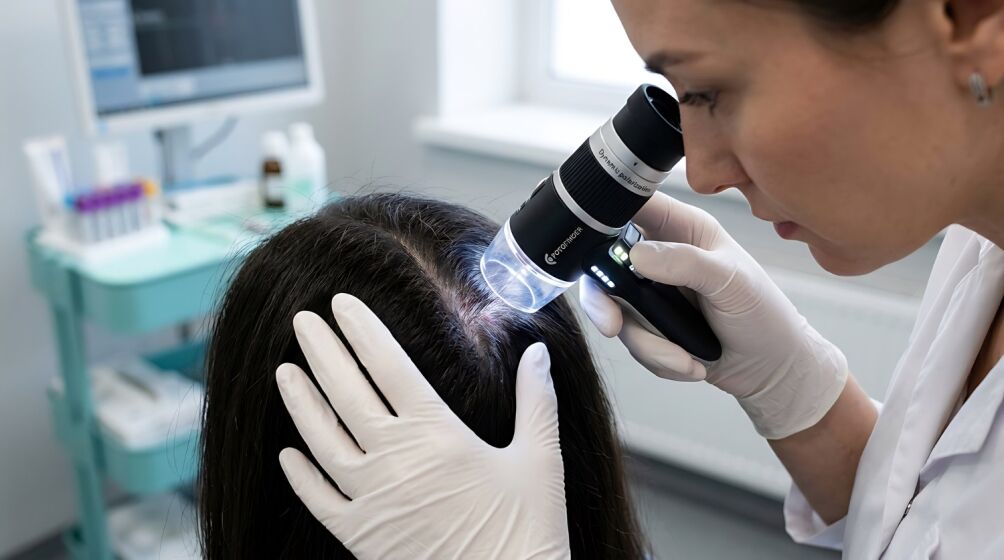
See Beyond the Surface of Hair Loss
A scalp analysis procedure can give us a close-up view of changes that may be hard to notice in the mirror. Images are useful, but they are only one part of a complete hair loss assessment, not a stand-alone diagnosis.
People often come to us because they have noticed progressive thinning, a widening part, a receding hairline, more shedding, patchy hair loss, scalp irritation, or lower density after a stressful or medical event. High-resolution images can document what your scalp and hair look like today, giving us a clearer starting point for a conversation about possible next steps.
How Scalp Analysis Procedure Images Support Assessment
During a scalp analysis procedure, we may use magnified photography or trichoscopy to look at the scalp surface, hair shafts, follicles, and density across selected areas. Images of the hairline, temples, crown, mid-scalp, and part line can create a useful visual baseline.
Magnification may show visible details such as:
- differences in hair shaft thickness
- the number of hairs growing from follicular units
- redness, flaking, or product buildup on the scalp
- areas where the scalp is more visible through the hair
For meaningful comparisons, photographs need consistent lighting, camera angles, hair placement, and image quality. A different hairstyle, wet hair, harsh overhead lighting, or a changed part can make density look different even when there has been little actual change.
What Images Can Reveal About Hair and Scalp Changes
Photos can help us identify visible distribution patterns. Diffuse thinning across the scalp may look quite different from reduced density at the temples, crown, or along the part line. Those patterns can guide our discussion of common hair loss concerns in women and men, while keeping the full clinical picture in view.
Close-up images may also show findings that deserve more attention, including scaling, redness, visible irritation, broken hairs, uneven density, or differences in hair shaft size. These clues do not provide an answer on their own, but they may point to the need for a more detailed medical evaluation.
Serial photographs can also be helpful when monitoring visible changes over time. If you are considering platelet-rich plasma (PRP) therapy, medical hair loss treatments, follicular unit excision (FUE) hair transplant planning, or scalp micropigmentation (SMP), standardized images may help us review changes in coverage and appearance. Results and timelines vary, so photographs are best used as one practical record rather than a promise of a particular outcome.
Why Images Cannot Explain Every Cause of Hair Loss
A scalp analysis procedure cannot identify every factor behind hair loss. Hormonal changes, nutritional concerns, thyroid conditions, medication effects, autoimmune conditions, recent illness, stress, and hereditary factors may all require a careful health history and, when appropriate, further investigation.
Images alone cannot always separate temporary shedding from progressive thinning. To understand what may be happening, we may ask about when the change began, whether hair loss runs in your family, your styling habits, scalp symptoms, and any broader changes in your health.
Some signs should not be watched through photographs alone. Sudden patchy hair loss, scalp pain, scarring, marked redness, or rapid shedding should be assessed by an appropriate health-care professional. Imaging can support documentation, but it should never delay medical attention when symptoms are concerning.
Turning Findings Into a Personal Hair Loss Plan
Hair restoration planning should reflect your pattern of hair loss, hair characteristics, scalp condition, medical history, goals, and expectations. There is no single approach that suits every person. After reviewing the findings, we can discuss options that may fit your situation, such as:
- non-surgical hair loss treatments
- PRP therapy
- SMP for the appearance of density
- FUE hair transplant planning for suitable candidates
Follow-up matters, because hair and scalp changes can develop gradually. Repeat assessments and standardized photographs may help us track visible changes, review your response to treatment, and adjust the plan when needed.
A Complete Assessment Looks Beyond the Photograph
At The Toronto Hair Transplant Clinic, we consider more than a single image when discussing hair loss concerns. Your history, scalp findings, goals, and available treatment options all belong in the conversation. For ongoing thinning, shedding, hairline changes, or scalp concerns, professional guidance is more reliable than online image comparisons.
A photograph can reveal a useful clue, but it cannot tell your whole hair loss story. The clearest next step is a complete assessment that puts visible findings into the context of your overall health, symptoms, and personal goals.
Gain Clearer Direction for Your Hair Loss
At The Toronto Hair Transplant Clinic, we use your scalp analysis procedure findings to help identify practical next steps for hair loss care. Our team can discuss treatment options that align with your concerns and goals. Contact us to arrange a consultation and speak with our team.

