
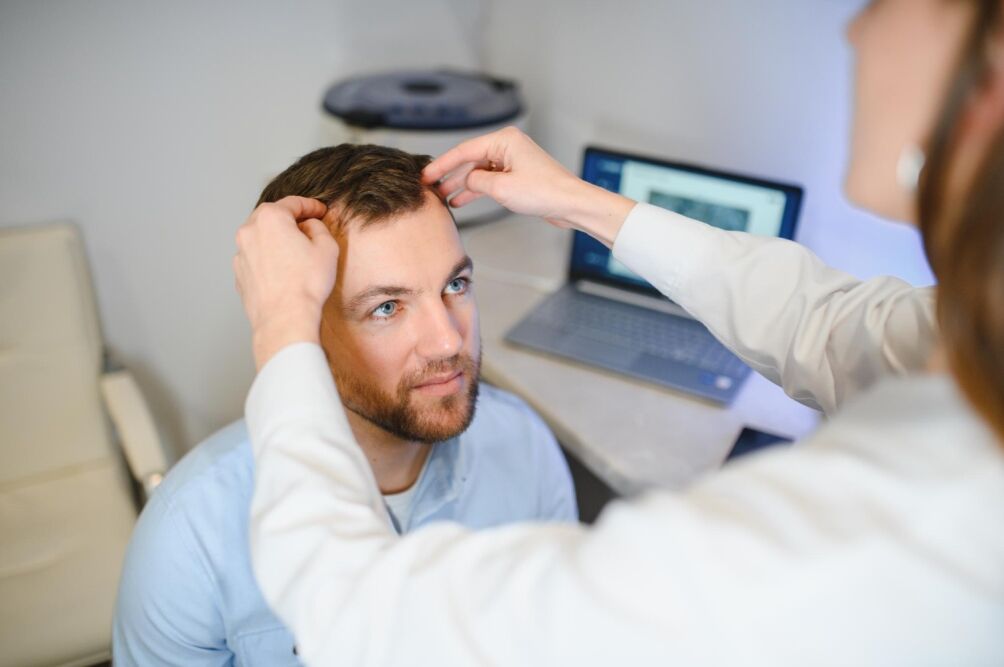
Start with a Clear Plan for Hair Loss Care
Choosing an FUE hair transplant clinic involves more than comparing procedure names or viewing before-and-after photos. Hair loss can affect confidence, and it is natural to have questions about candidacy, recovery, treatment choices, and what results may be possible for you.
At our clinic, we believe informed planning starts with an open discussion. Follicular unit excision, or FUE, is a surgical hair restoration procedure that requires a careful look at your scalp, donor area, hair characteristics, and pattern of hair loss. Understanding the surgical team’s role can help you feel clearer about the care that you are considering.
What to Look for in an FUE Hair Transplant Clinic
A thoughtful consultation should be the starting point at an FUE hair transplant clinic. Before any treatment plan is considered, we review the factors that may shape your options, including your medical history, medications, scalp health, family history of hair loss, and how your thinning has changed over time.
FUE may be one part of a broader hair loss plan, but it is not automatically the right choice for every person at every stage of hair loss. Depending on your assessment, we may also discuss non-surgical options such as platelet-rich plasma (PRP) therapy, medical hair loss management, or scalp micropigmentation (SMP).
It helps to ask direct questions during your consultation, including the following:
- Who will assess my hair loss and develop my treatment plan?
- Who administers local anaesthesia?
- Who extracts grafts, creates recipient sites, and places grafts?
- What should I expect while healing and as new growth develops?
We also believe that you should receive realistic information about donor hair, possible graft numbers, and the gradual nature of hair growth after a transplant. A clear conversation now can prevent confusion later.
Understand Each Surgical Team Member’s Role
The physician’s role includes evaluating whether you may be a candidate for surgical hair restoration and considering possible causes of hair loss. Planning also matters. A physician may help determine hairline design, graft placement, and how available donor hair should be distributed across areas of thinning.
Trained clinical staff can support different parts of the procedure based on their training and the clinic’s protocols. Their work may include preparing you for treatment, handling grafts, assisting with implantation, monitoring your comfort, and reviewing post-procedure instructions.
Transparency matters throughout the process. You deserve to understand who is performing each part of the FUE procedure and how physician oversight is maintained. Questions worth asking:
- Who is responsible for the surgical plan?
- Which team member performs graft extraction?
- Who creates the recipient sites for implantation?
- How does the physician oversee treatment and address medical concerns?
In Ontario, you can also ask about a physician’s medical licence and professional qualifications. When discussing credentials in Canada, the appropriate language may include Royal College-certified or certified by the Royal College of Physicians and Surgeons of Canada, where applicable. Terms commonly used in other countries do not always reflect Canada medical terminology.
Surgical Planning Can Protect Donor Hair
FUE involves harvesting individual follicular units from the donor area, often located at the back and sides of the scalp. These hairs may be more resistant to pattern hair loss, but donor hair is still limited. That is why a proper donor-area assessment is an important part of planning.
Several details may affect how we approach an FUE hair transplant plan:
- Donor hair density and scalp coverage
- Hair calibre, texture, and curl pattern
- Scalp characteristics and donor-area condition
- The location and pattern of current thinning
- The possibility of continued hair loss over time
A natural-looking hairline is not simply about placing as many grafts as possible near the front. We consider how grafts may be distributed in a way that fits your facial features, current hair loss pattern, and future needs. Preserving donor hair can be particularly important when hair loss may continue.
No clinic can predict every future change in hair loss. For that reason, we encourage plans that look beyond a single procedure. Ongoing hair loss treatment may be discussed, when clinically appropriate, helping you consider how surgical and non-surgical care can work together over time.
Ask About Safety and Communication
Safety conversations should be clear, not rushed. Before choosing an FUE hair transplant clinic, ask how the procedure is supervised, what happens if a medical concern arises, and how the team prepares you for local anaesthesia and recovery.
We encourage you to discuss practical details such as infection-control practices, pre-procedure instructions, aftercare, and how to get guidance if you have concerns after treatment. Clear instructions can make the recovery period feel more manageable.
It is also important to talk honestly about possible risks and limits. These may include swelling, discomfort, temporary shedding, scarring, infection, uneven growth, or the possibility that further treatment could be considered later. Hair transplant results vary from person to person based on donor supply, hair characteristics, healing, hair loss progression, and aftercare.
Promised outcomes should always raise questions. A responsible conversation about hair restoration leaves room for individual differences, gradual growth, and the fact that your plan may need to adapt as your hair loss changes.
Putting Your Questions to Work
A well-chosen hair restoration provider should help you understand the people involved in your care, the reasoning behind the treatment plan, and the role of long-term hair loss management. Bring questions about FUE, SmartGraft, PRP therapy, scalp micropigmentation, and any other option that you are considering.
The most useful next step is to focus on clear answers, realistic expectations, and a plan that respects both your current concerns and your future donor hair needs.
Understand Your Surgical Team
At The Toronto Hair Transplant Clinic, we can help you understand what to ask about the roles, training, and involvement of the team performing your procedure. Learn more about choosing an FUE hair transplant clinic that takes a careful approach to hair loss treatment. If you would like to discuss your concerns and options, contact us to arrange a consultation.


