
See What Your Scalp Can Tell You About Hair Loss
A change in hair density does not always explain why hair loss is happening. Increased shedding, a widening part, a receding hairline, patchy areas, or thinner-looking hair after a health or lifestyle change can appear similar at first. Under the surface, though, the cause and pattern may be quite different.
That is why we view a hair follicle examination as an important first step before discussing hair restoration. A close look at the scalp and hair can reveal details that are not obvious in the mirror, including changes in hair thickness, density, follicle distribution, and scalp condition. We also consider your concerns, family history, medical history, and goals, rather than treating every type of hair loss the same way.
The purpose is not simply to choose a procedure. It is to build a clearer picture of your current hair loss pattern and discuss whether options such as follicular unit excision (FUE) hair transplantation, platelet-rich plasma (PRP) therapy, scalp micropigmentation (SMP), or non-surgical management may be worth considering.
How a Hair Follicle Examination Identifies Hair Loss
During a hair follicle examination, we assess more than the area where you first noticed thinning. The hairline, crown, scalp, and donor area can each provide useful information. We may look at overall density, hair calibre, visible scalp health, and the way follicles are distributed across different parts of the scalp.
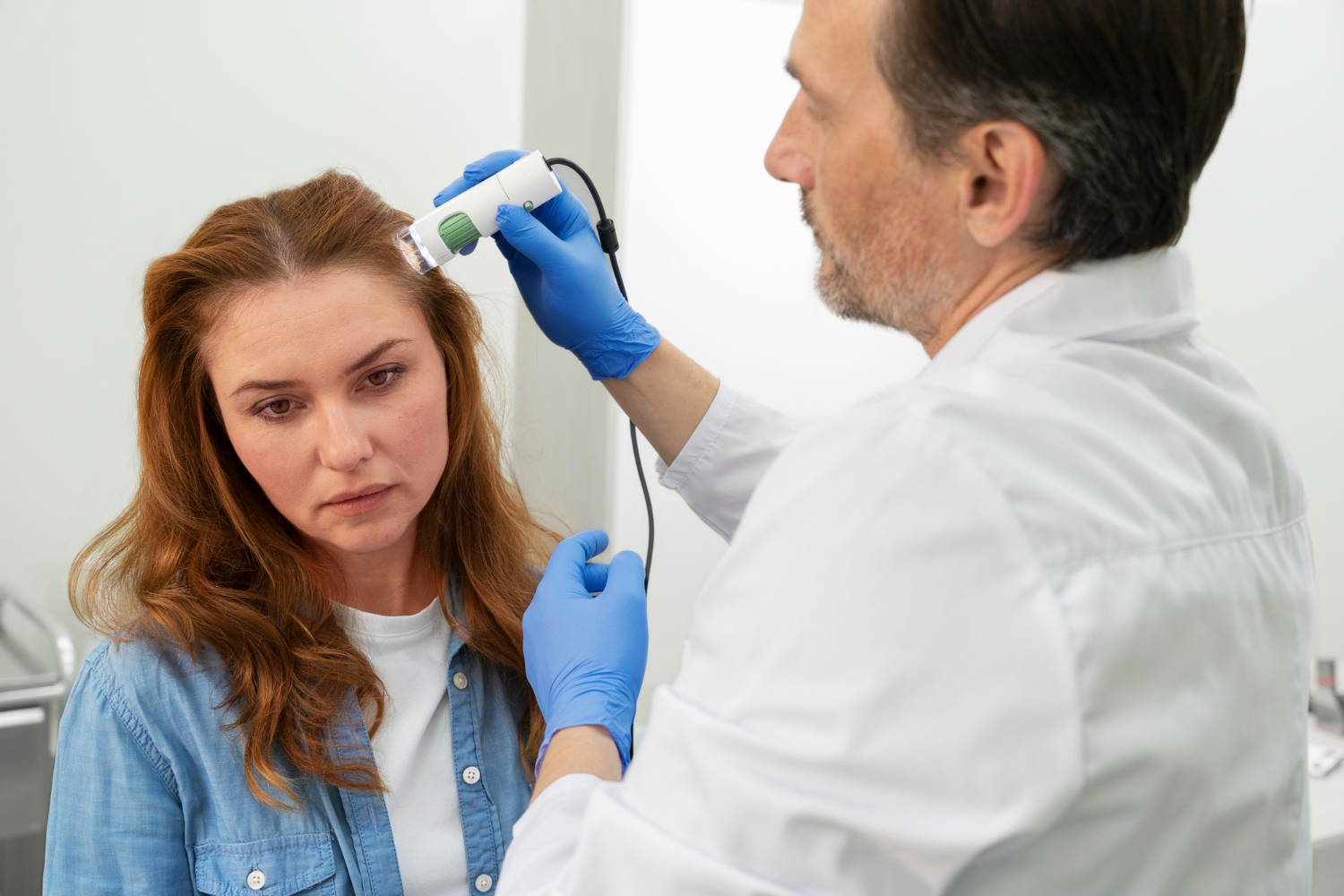
Magnified scalp imaging, sometimes called trichoscopy, may also help us take a closer look at hair shafts and follicular openings. This can support a more informed discussion about whether a person’s hair loss appears to follow a pattern associated with progressive thinning.
A key feature we may look for is follicular miniaturization. With androgenetic alopecia, also known as male pattern hair loss or female pattern hair loss, affected hairs may gradually become:
- finer in diameter
- shorter in length
- less pigmented
- less able to provide visible coverage
Recognizing miniaturization can help distinguish gradual pattern hair loss from other concerns. It also helps us discuss what may be realistic over time, especially when hair loss is still progressing.
For people considering FUE hair transplantation, the donor area deserves careful attention. Donor hair density and hair quality help shape conversations about graft planning, the amount of coverage that may be possible, and whether a staged approach may make sense. An assessment cannot promise a specific result, but it can help us set expectations based on what your scalp and available donor hair show today.
Separating Temporary Shedding from Pattern Hair Loss
Not all shedding means permanent hair thinning. Some people notice diffuse shedding after illness, surgery, major stress, nutritional changes, medication changes, or hormonal shifts. Telogen effluvium is one term used to describe a type of temporary shedding that can affect hair across the scalp.
Pattern hair loss usually looks different. Instead of seeing only more hairs shed, you may notice a gradual change in density, a wider part, reduced crown coverage, or a receding hairline. Miniaturization may be part of that process, with hairs becoming finer over time.
When we conduct a hair follicle examination, we consider the pattern and timing of your hair loss alongside your health history. The findings may suggest that the concern appears to be:
- diffuse across the scalp
- localized to one area
- patterned around the hairline, part, or crown
- connected with visible scalp changes
- in need of further medical assessment
Sudden patchy hair loss, redness, scaling, pain, itching, or concerns about scarring should not be ignored. If symptoms suggest an underlying scalp or medical condition, we may recommend speaking with a family physician, dermatologist, or another appropriate health-care professional before moving forward with hair restoration planning.
How Findings Guide Personalised Hair Loss Treatment
Hair loss treatment should reflect the type of hair loss, its extent, how stable it appears, and the changes you may experience over time. Early thinning can call for a different conversation than established hairline recession or reduced density through the crown.
FUE hair transplantation may be discussed for eligible people with adequate donor hair and realistic expectations. A hair follicle examination helps us assess the areas that need coverage, the donor supply available, and whether treatment should be gradual rather than completed in a single stage.
Non-surgical options may also be part of the discussion. PRP therapy may be considered for some people experiencing hair thinning, although suitability, treatment protocols, and expected results vary from person to person. Scalp micropigmentation can create the appearance of greater density or a closely shaved hairline. It does not regrow hair follicles, but it may be an option for someone whose goals are primarily cosmetic.
No two scalps, hairlines, or hair loss concerns are identical. By starting with the visible condition of the scalp and follicles, we can discuss options based on your own hair characteristics instead of relying on a one-size-fits-all plan.
Why Assessment Supports Safer Treatment Decisions
Moving ahead without a proper hair loss assessment can make it harder to address the concern that is actually present. Active shedding, progressive pattern hair loss, scalp inflammation, and patchy loss may each require different next steps. Understanding the likely pattern first supports more informed decisions.
An assessment can also establish a useful baseline. Scalp photographs, density observations, hairline measurements, and treatment history may help us track changes at future visits. Over time, this information can support a clearer discussion about whether hair loss appears stable, progressing, or changing after a selected approach.
Helpful questions to raise during your assessment:
- What type of hair loss appears the most likely?
- Is donor hair adequate for FUE hair transplantation?
- What level of coverage may be realistic?
- How long could treatment take? What maintenance may be needed?
- Should another medical assessment be considered first?
Clear answers matter because hair restoration is often about long-term planning, not a quick decision based only on what is visible today.
Clearer Next Steps Start with a Closer Look
A hair follicle examination gives you a stronger starting point for understanding hair loss. Looking at the scalp, hair density, follicle pattern, donor area, and health history can help separate general concerns from details that may affect treatment planning.
Whether the discussion involves FUE hair transplantation, PRP therapy, SMP, or another approach, the most useful next step is based on your present hair and scalp characteristics. A thoughtful assessment helps keep expectations realistic and makes room for decisions that suit your individual situation.
Gain Clarity Before Choosing Treatment
At The Toronto Hair Transplant Clinic, we use a hair follicle examination to help guide a care plan that reflects your hair loss concerns and goals. Our team can answer questions about available treatment options and what may be appropriate for you. When you are ready to discuss your next steps, contact us to arrange a consultation.